

Is Cake Flour Different Than Regular Flour
One of the questions I'm asked most frequently has something to practise with the different kinds of baking flours on the market. What are they and why are they used for sure recipes?
Possibly the nearly important 'specialty' flour to understand is cake flour.
In fact, there are a couple recipes that I've made and some that I've published on the site that admittedly require cake flour. Using all-purpose flour instead will actually fundamentally damage the final result of the recipe. A practiced example of this is Affections Nutrient Cake or fifty-fifty my Onetime Fashioned Sour Foam Doughnuts.
In order to answer these questions for yous, I went crazy in the kitchen baking up multiple batches of cupcakes with the specific intent of creating visuals that illuminate the science of cake flour in an easy to understand style.
Don't become me incorrect, sometimes it pains me to intentionally make batches of anything that I know aren't going to come out exactly correct, but the photos are so valuable. They actually show you how dissimilar ingredients and techniques bear upon your favorite treats. Sometimes the differences are shocking!
I don't know nearly you, but I'k such a visual person that the best way I tin larn about the magic and scientific discipline of baking is by seeing information technology in activity.
And so, I not merely experimented with different brands (and styles) of block flour, but as well how cake flour substitutions work.
Cake Flour 101
Tools & ingredients used:
I made every effort to replicate each batch equally perfectly as possible, using the same exact tools and ingredients whenever applicative. I used a kitchen scale to measure ingredients to ensure 100% accuracy. Each batch was baked separately only in the aforementioned oven at the same temperature for exactly 20 minutes.
I used Bleached Gold Medal All-Purpose Flour for the control batch and DIY cake flour. The two brands of cake flour I tested were Swans Downwardly Cake Flour, which is bleached, and King Arthur Cake Flour, which is unbleached. Lastly, I baked the batches in my Wilton Cupcake Pan, using a large spring-loaded scoop to fill each crenel evenly with batter.
All the cupcakes were baked on the same solar day to exist photographed together. Before I reveal some of those photos, let's encompass the basics you need to know.
What is block flour?
Cake flour is very finely milled from soft wheat from the heart of the wheat endosperm. This helps to requite cake flour its very fine silky soft texture. That fineness is actually why block flour should be sifted before use as it's more than likely to clump together.
What is the deviation between block flour and all-purpose flour?
The main differences are that each flour is made from a different variety of wheat, milled to a different texture, and comprise different amounts of protein vs. starch.
Cake flour has the lowest protein content of most flour products available:
- Bread flour: 12-fifteen% protein content
- All-purpose flour: ix-12% protein content
- Pastry flour: ix% protein content
- Cake flour: 6-eight% poly peptide content
Protein content differs by brands and even styles of flour under the same brand. To effigy out the protein content in any flour, divide the number of protein grams per serving by the number of full grams per serving.
This lower level of poly peptide means cake flour also has more starch. Overall, the use of block flour in a recipe will discourage gluten formation compared to a higher protein flour product. Lower levels of gluten equal more softness and tenderness in a baked adept. Retrieve of something that has a really high level of protein, like steak. It's tough and chewy. When we want the opposite of that texture, we want lower levels of protein to a soft and fragile crumb.
By contrast, this is why bread flour has more protein than all-purpose flour and certainly more than than cake flour. Breads require that actress poly peptide to form potent gluten webs that shape the backbone of a loaf and create that slightly chewy, bready texture.
Is cake flour bleached or unbleached? (This is of import!)
Cake flour is typically bleached, which farther weakens the proteins and prohibits gluten germination. Bleached flours in general soak upward more water and produce thicker batters.
In the photos below, I really tested Swans Down Bleached Cake Flour vs. King Arthur Unbleached Cake Flour to show you just how of import this one item tin be! But before we get at that place, let me clear upwards some common misconceptions virtually bleached flour.
The bleached flour y'all buy at the supermarket does Not comprise chlorine in the final product. When flour products are chlorinated, manufacturers care for the flour with an extremely low level exposure to chlorine gas to provoke a chemical reaction. That chemic reaction not merely changes the flour'south characteristics (more on that below) merely it changes the chlorine itself. The chlorine turns into several other compounds: chlorite (which occurs naturally in unbleached flour), hypochlorous acid (plant in our own immune cells), and chloride (an electrolyte institute in a product similar Smart Water). Withal, this is just i method of bleaching flour. You lot tin acquire more about flour bleaching here.
Bleached flour actually allows more moisture to be absorbed in a batter or dough to make dough less sticky and easier to handle. This can also help preclude excess spread in baked goods (recollect cookies). It improves the construction and height of cakes. It can brand taller, sturdier breads. It too makes the flour more shelf stable and volition not kill yeast.
At that place'due south tons of sources on this in scientific publications, hither'due south one on the safety of consumption.
Are block flour and pastry flour the same?
Where cake flour has a protein content of 6-eight%, Pastry Flour is effectually 9% and has less starch than cake flour. Pastry flour is as well typically unbleached unlike block flour, so information technology will absorb less liquid in a recipe compared to cake flour. If you're in a bind and only take pastry flour for a recipe that calls for cake flour, it'southward better to use the pastry flour than all-purpose flour if you're in a pinch.
Testing Cake Flour Substitutions
Let's get into the experiments!
The fact that cake flour is fabricated from a different multifariousness of wheat, milled differently, and is frequently bleached, makes information technology behave very differently than all-purpose flour in terms of how information technology affects the chemistry of a recipe. This also means it's incommunicable to recreate cake flour exactly at home using "DIY" substitutions. That'due south why I was so eager to compare side-past-side block flour vs. all-purpose flour vs. DIY cake flour.
I had a suspicion of how this experiment would turn out, only I wanted to be 100% certain. I know many of us don't e'er accept cake flour in our pantries so it's kind of an annoying ingredient when yous run across it chosen for in a recipe!
Yet because of all of the baking experiments I've washed, I know 1 small, seemingly insignificant change can have drastic results in baking.
Control Recipe: All-Purpose Flour
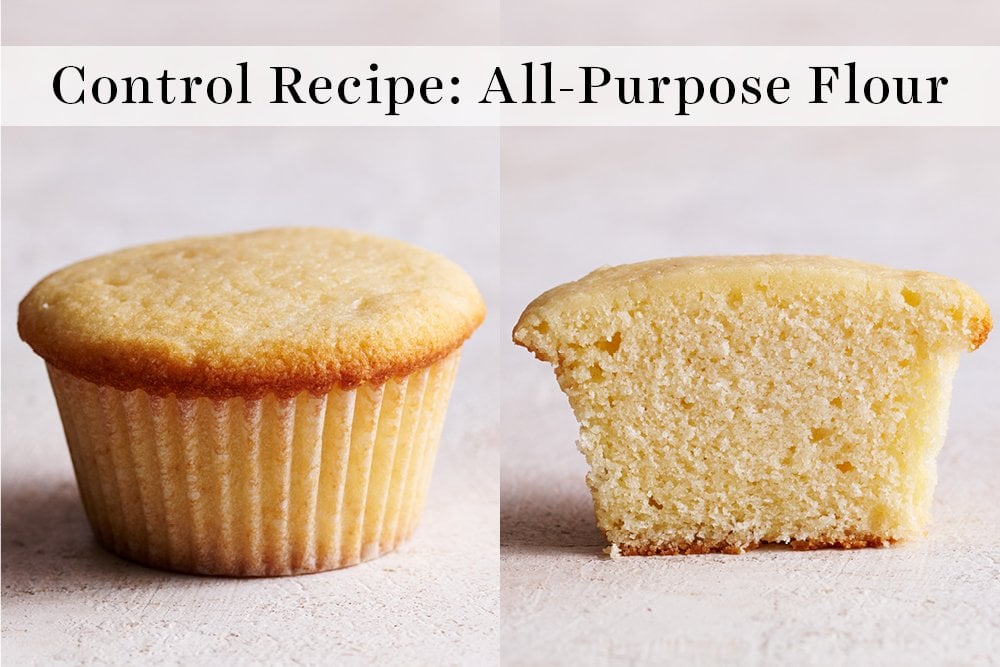
The cupcakes I baked were based on my standard cupcake recipe you can see at the lesser of this article. I re-fabricated the same recipe each fourth dimension, simply changing out the flour for each batch y'all come across below.
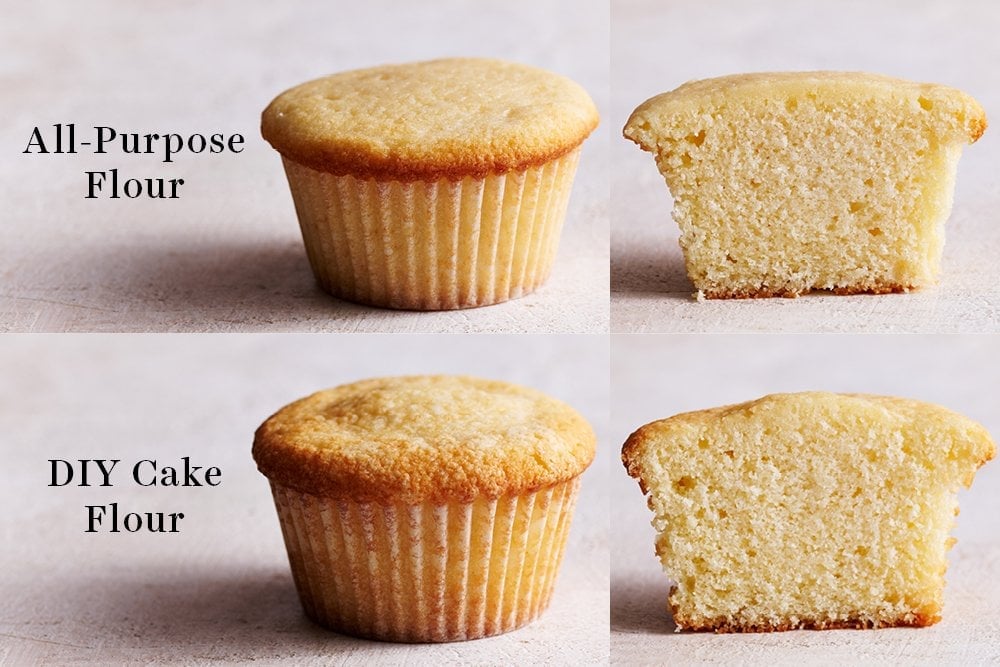
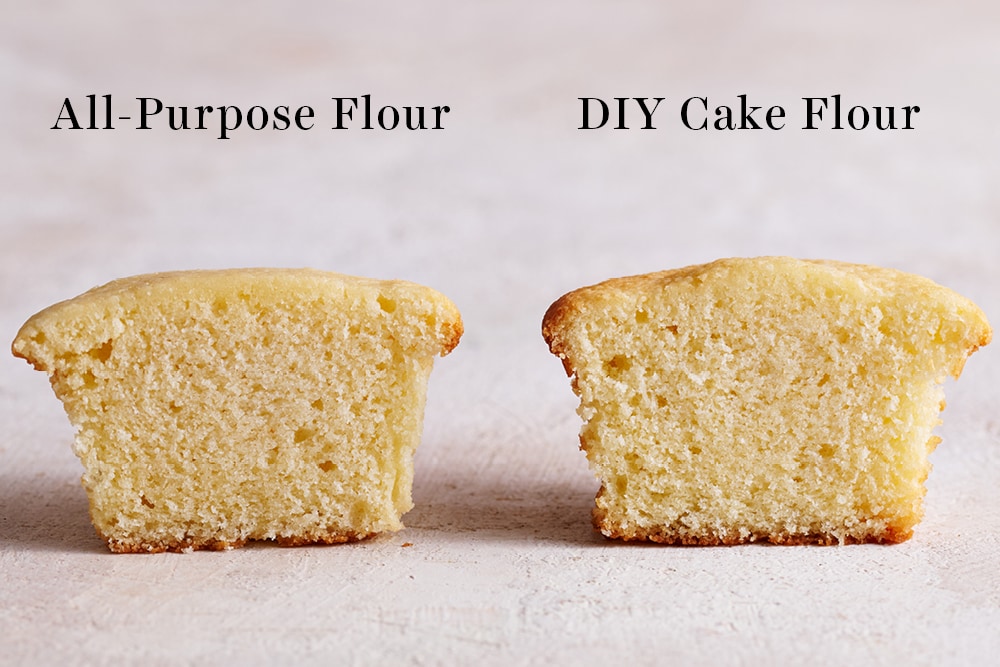
These control cupcakes were soft yet sturdy with a slightly open crumb. They weren't super tall and had some neat on acme that I think visually reflects the slight chewiness they had. Basic yet delicious and total of vanilla season.
DIY Cake Flour
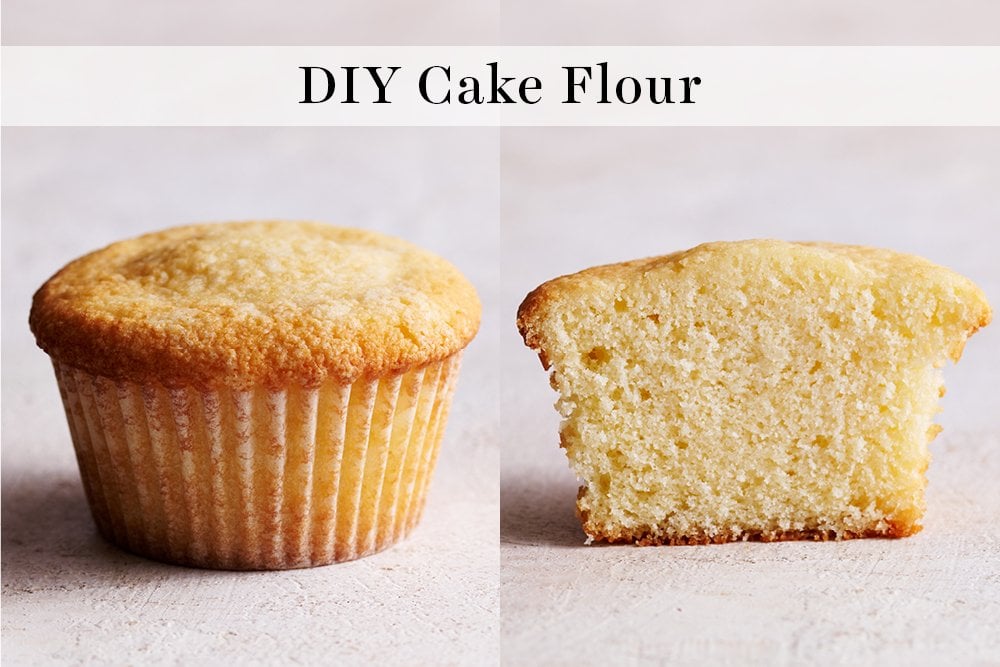
Using the DIY cake flour technique just below, these cupcakes turned out visually more like the command / all-purpose flour cupcakes than the cake flour cupcakes. Their texture was another story. These were more crumbly and had an almost gritty texture which I'm attributing to the cornstarch. They virtually felt like they dissolved in your rima oris, which honestly, I didn't treat. I won't exist using DIY cake flour in my baking… even if information technology's a full hurting to run to the store to grab cake flour!
How to Brand DIY Block Flour
Although I would Non recommend using DIY cake flour based on our experiment results, here's how I did so:
1 cup minus 2 tablespoons all-purpose flour + 2 tablespoons cornstarch
So I sifted this flour + cornstarch mixture v times with a fine mesh strainer.
Comparison Brands of Block Flour: Which is the Best?

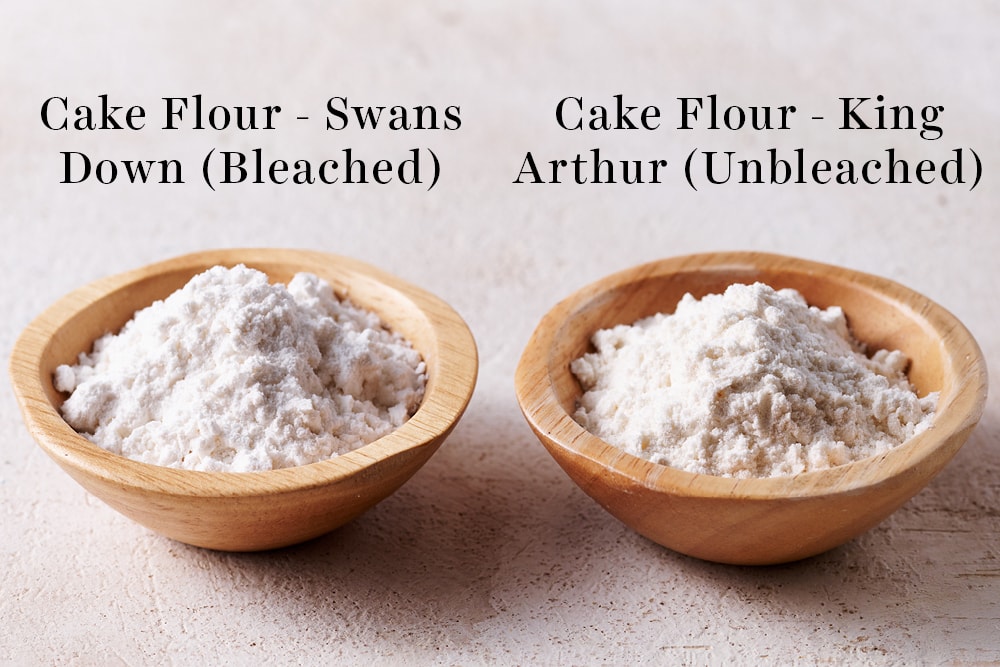
Cake Flour – Swans Down (Bleached)
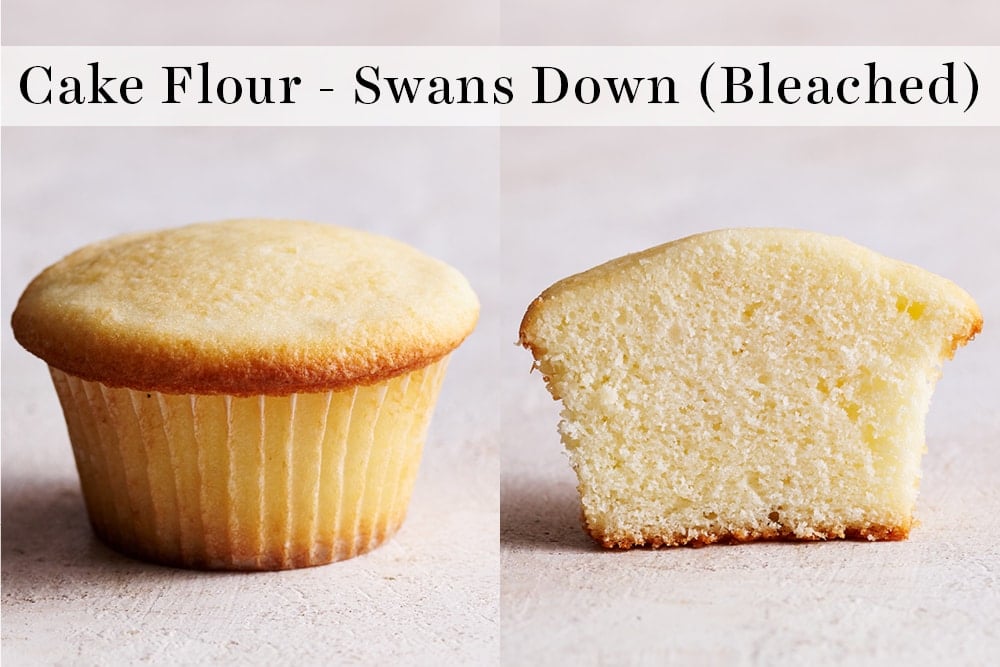
I used the same amount of Swans Downwardly Cake Flour in place of the all-purpose flour in this batch. These cupcakes baked upward stake and tall with a spongier and softer texture. The softness really reminded me slightly of a more commercially produced cupcake simply not necessarily in a negative style. They were much more than soft and delicate that I don't actually call up they'd concur up well to a heavy or generous frosting or filling. They also had slightly less vanilla flavor than the all-purpose flour cupcakes.
For me, I tend to prefer cupcakes made with all-purpose flour instead of cake flour. Even so, for some recipes similar Angel Nutrient Cake or certain layer cakes, cake flour actually helps to create that fine and delicate nibble feature of that style of recipe. In those cases, information technology really shouldn't be substituted!
Cake Flour – King Arthur (Unbleached)

I was SO excited to see the comparison between the Swans Downwards and Rex Arthur Flour cupcakes to see what bear on bleaching had on the final upshot, amidst other variances betwixt the two brands.


Although I love King Arthur as a make, their cupcakes were noticeably less flavorful than the all-purpose cupcakes. Compared to the Swans Down cupcakes, the King Arthur cupcakes had an about corn bread texture. I'll be sticking with Swans Down when I need to use cake flour.
Cake Flour vs. Substitutions Final Comparison
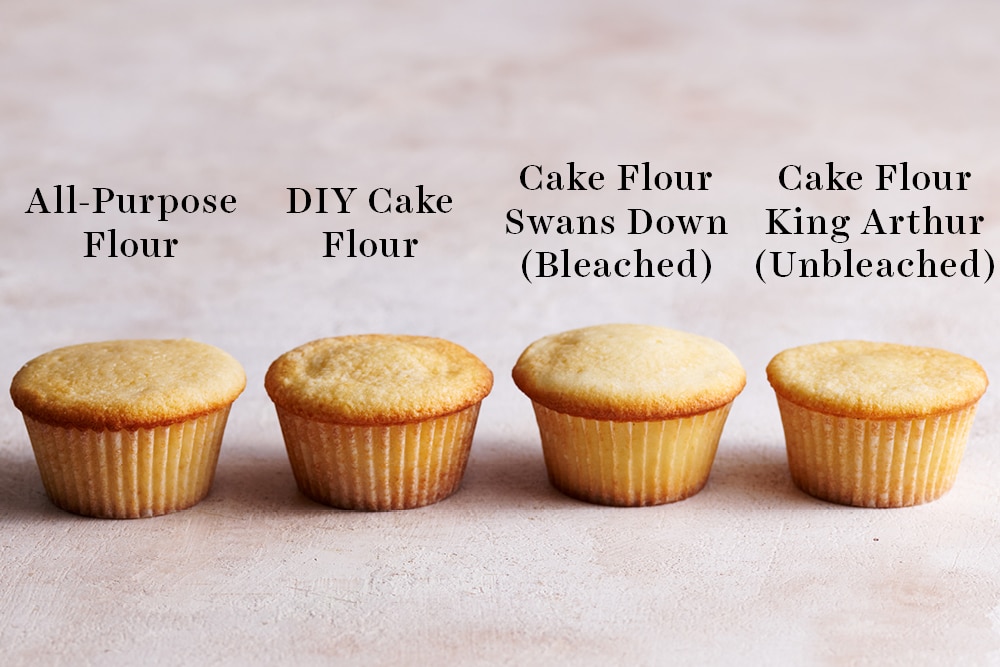
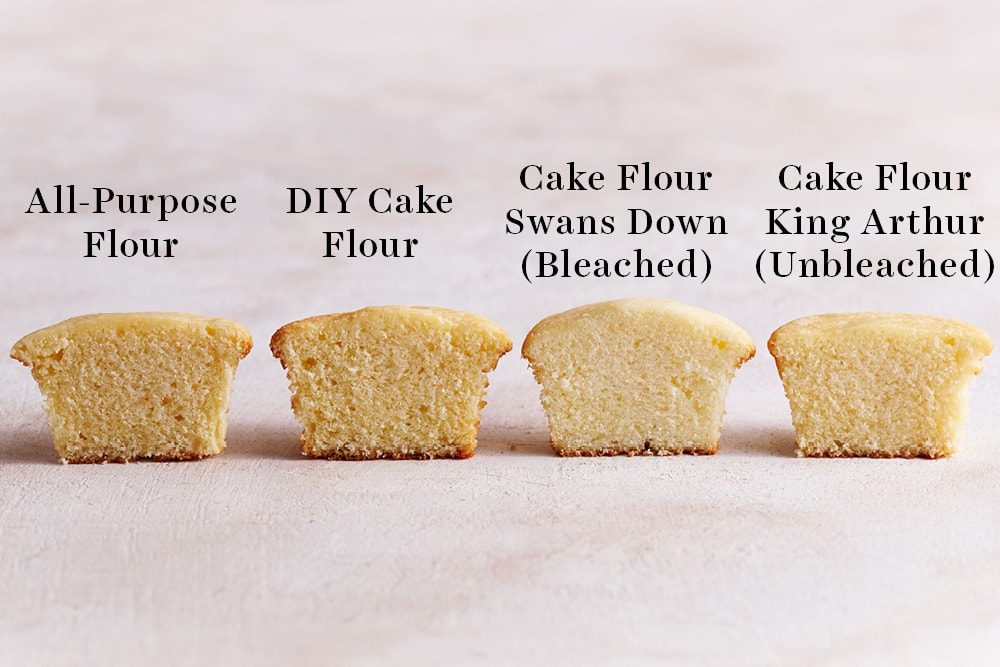
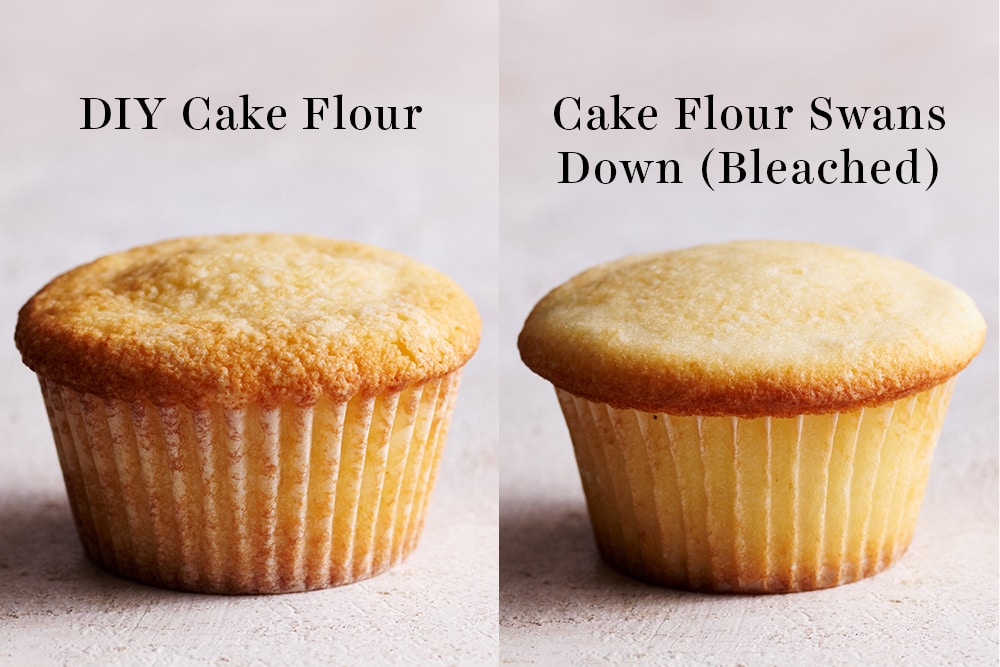
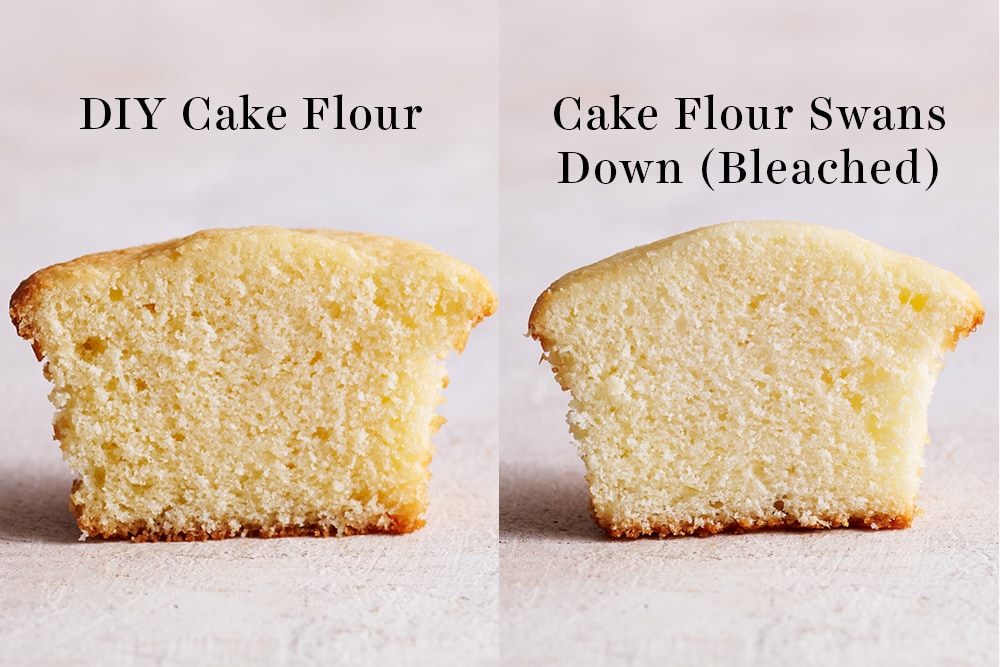
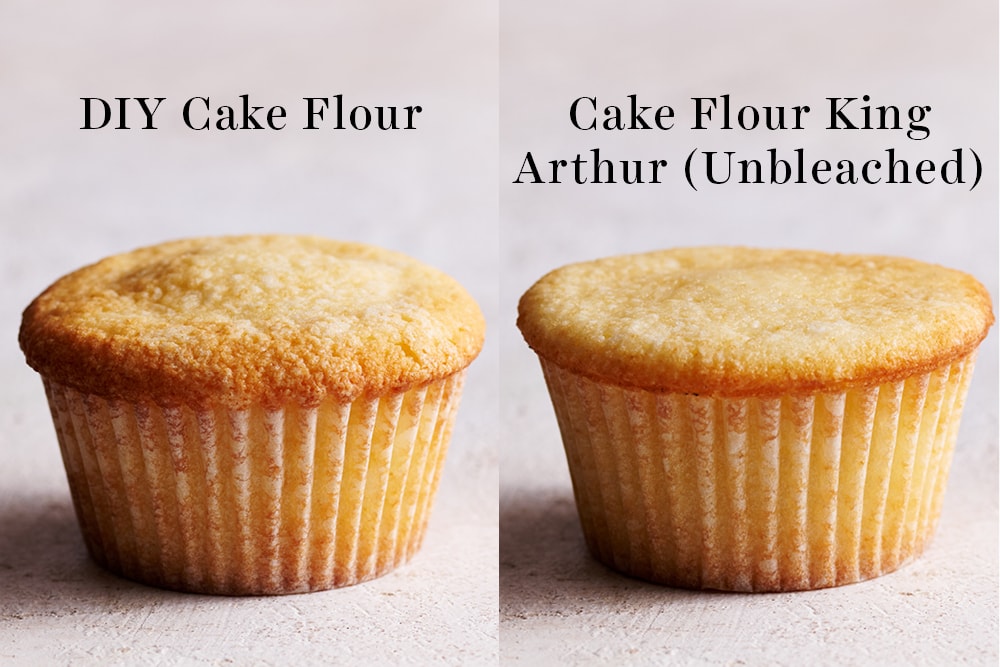
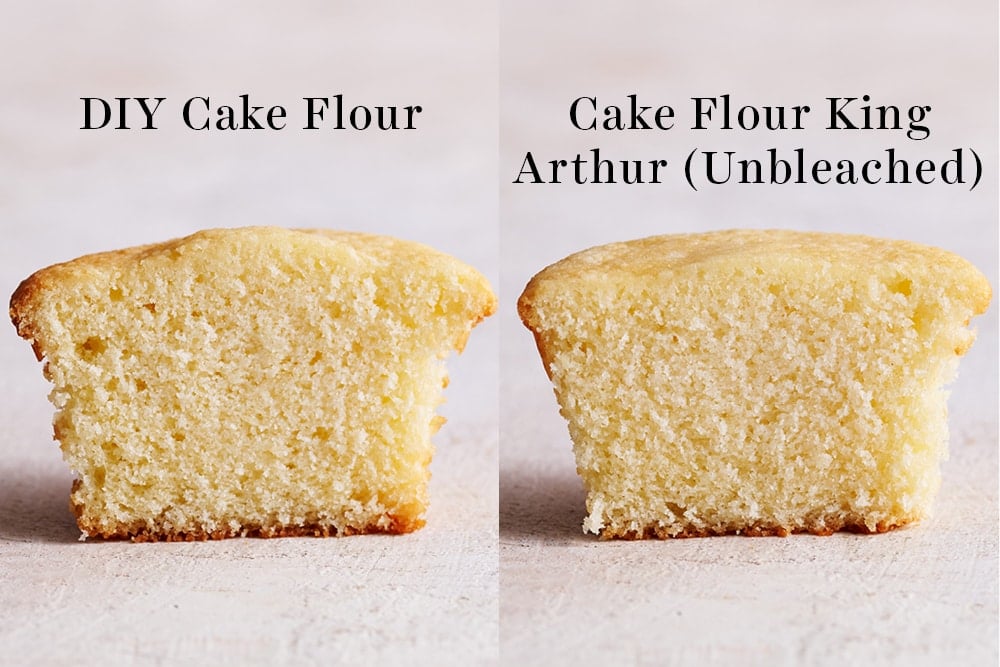
I think visually, these comparisons do a good job of proving the belief I've always held that nothing is quite as good as the real affair.
So the final question is…
Can Cake Flour be Substituted?
It shouldn't exist. Recipes that use cake flour are typically more delicate and finicky and require the exact ingredients chosen for.
In fact, xc% of substitutions yous make in baking will change the taste and texture of the final result. Sometimes substitutions are necessary, and I understand that. However, the Handle the Heat method of blistering recommends that you always follow the recipe exactly as information technology's written… at least the very first time y'all make it so y'all empathise how information technology'south supposed to turn out. And then you can experiment with substitutions and alternatives.
Does cake flour go bad?
Luckily, since cake flour is refined and bleached, it will keep in your pantry for a long time. If stored in a cool and consistently dry and airtight place, it should last at least 6 months if non upward to a year. Then why not have some on manus for those few recipes that use it so you can actually accept your baking to that next level?
Source: https://handletheheat.com/cake-flour-101/
Posted by: mulliganthimed1970.blogspot.com
0 Response to "Is Cake Flour Different Than Regular Flour"
Post a Comment